 Myopia surgery
 Myopia prevention and control
 Presbyopia
 Cataract
 Dry eye
 400-8600-525
 CN
 One City, Three Campuses

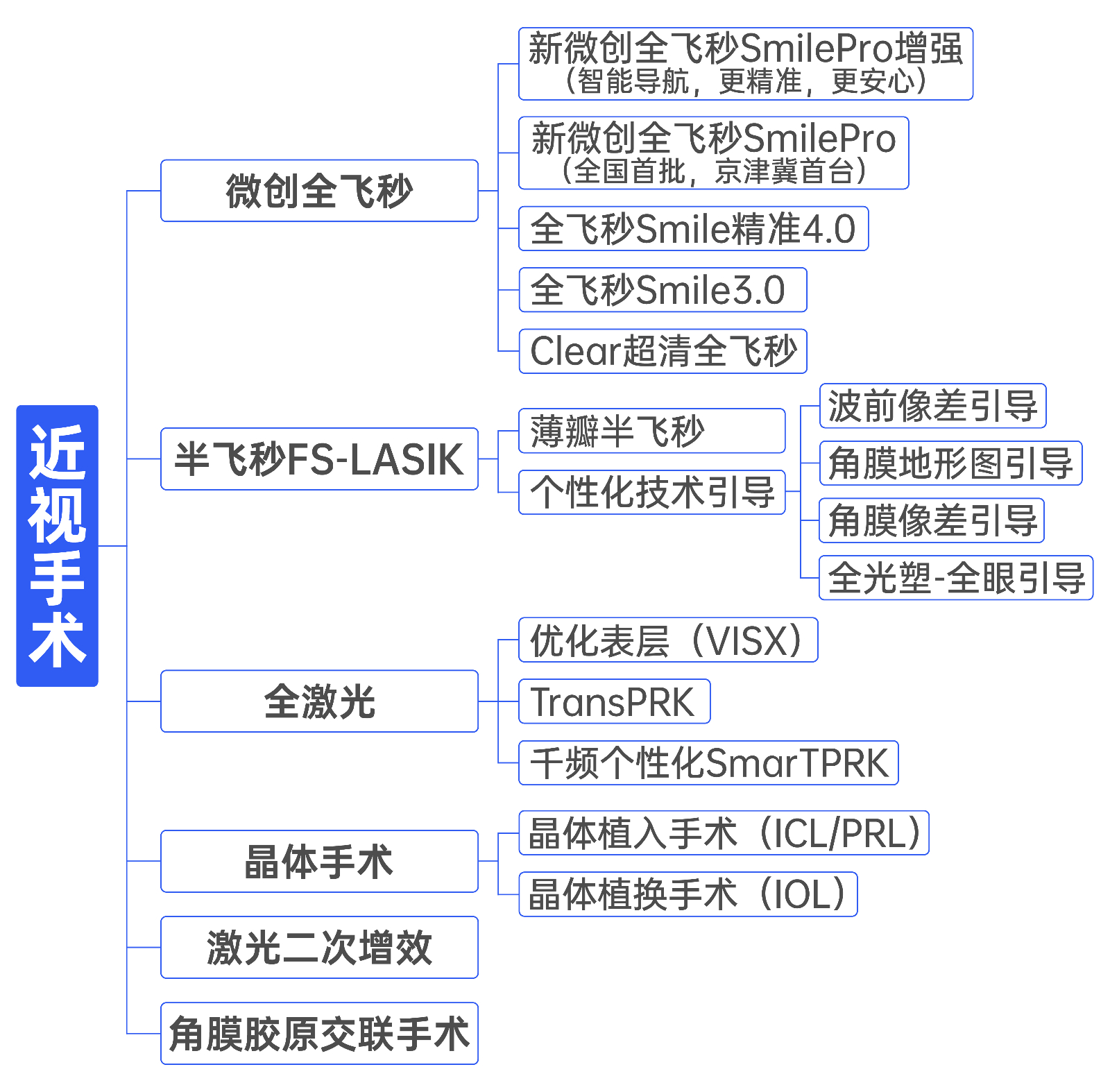
Since its establishment in 2011, Ming Vision&Ophthalmology has clearly positioned itself as a specialized medical institution for myopia surgery, committed to building a leading position in the global optometry industry and contributing Chinese technological strength to the global myopia surgery industry. With a senior team of experts and leading edge surgical equipment, it can provide you with truly personalized myopia surgery plans tailored to your needs. In terms of myopia surgery, Mingshi Vision covers six categories of comprehensive surgical procedures, including minimally invasive full femtosecond, semi femtosecond FS-LASIK, full laser surgery, crystal surgery, laser secondary enhancement, and corneal collagen cross-linking and reinforcement surgery.
01
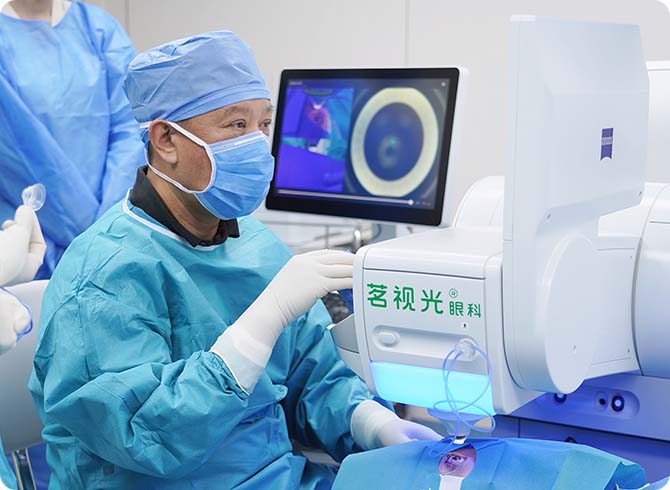
Full femtosecond surgery (full name is "micro incision stromal lensectomy"), the English abbreviation is smile, and the surgical incision really looks like a "smile" shape. The operation is a flap free minimally invasive operation. Femtosecond laser is used to scan the corneal stromal layer up and down for two times at different depths in the whole process to produce a convex lens shaped thin layer of corneal tissue, and then the convex lens tissue is removed through a small incision of 2mm-4mm. The operation is completed. In this way, the overall shape of the cornea presents a concave lens state. Full femtosecond surgery has the advantages of short operation time, small corneal incision and fast recovery time. Mingshiguang ophthalmology covers five full femtosecond surgical procedures, including new minimally invasive full femtosecond smilepro enhancement, new minimally invasive full femtosecond smilepro, full femtosecond smile precision 4.0, full femtosecond smile3.0, and clear ultra clear full femtosecond.
02
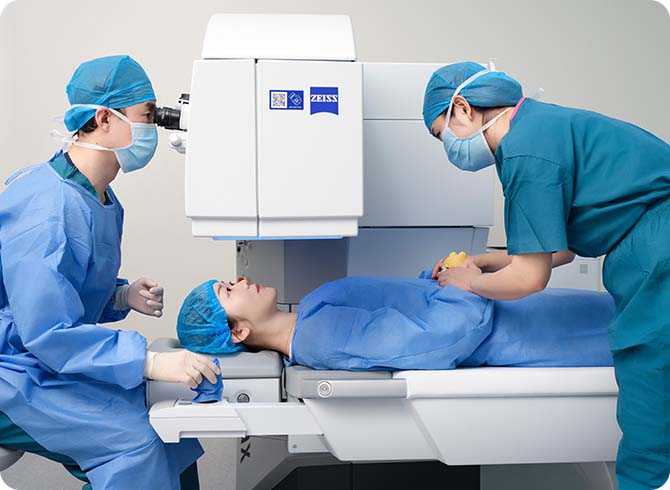
Half femtosecond surgery (full name: femtosecond laser flap excimer in situ keratomileusis, fs-lasik) is a common myopia correction surgery. Its core principle is to combine femtosecond fs-lasik laser and excimer laser technology, make corneal flap with femtosecond laser, and cut corneal stroma with excimer laser. MingVision optical coverage core types: standard half femtosecond, thin petal half femtosecond, personalized half femtosecond, personalized half femtosecond - all optical plastic.
03
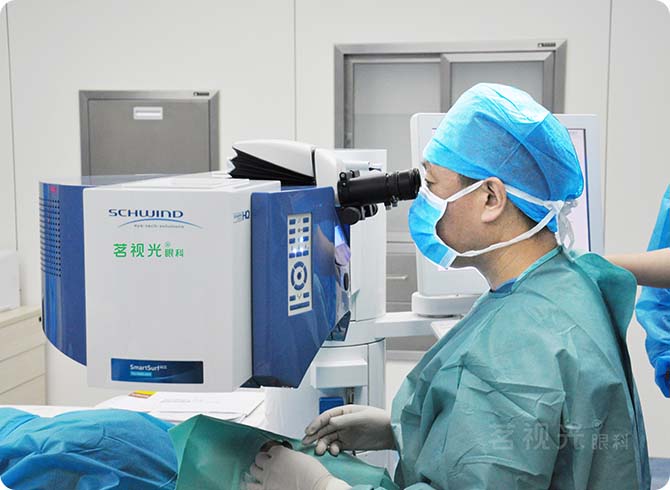
In full laser surgery, it does not need to make a corneal flap. After removing the epithelial layer of the most superficial layer of the cornea, the stromal layer is polished with an excimer laser. The corneal surface and stromal tissue are polished and trimmed directly with an excimer laser, and then the surface epithelium grows back by itself. Ming opto ophthalmic full laser surgery mainly includes surface optimization TransPRK、 There are three kinds of personalized thousand frequency transprk.
04
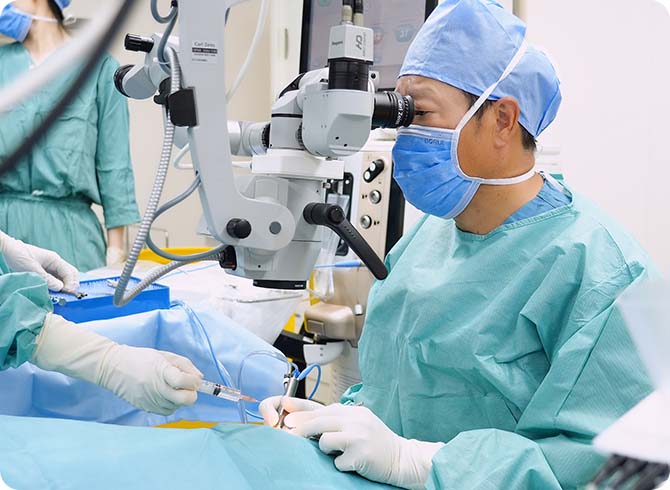
Lens surgery includes two types: lens implantation and lens replacement surgery. Lens implantation surgery (such as ICL/PIL) is an "additive" myopia correction surgery (compared to corneal laser, it is called a "subtractive" type), also known as endoscopic surgery. By implanting an artificial lens into the eye, the refractive power is changed, equivalent to placing a nearsighted lens in the eye. It does not change the normal structure of the cornea and can correct up to 2000 degrees. It is suitable for people with high degree and relatively thin cornea who do not have the conditions for corneal laser surgery. Under the leadership of Professor Zhu Siquan, the Mingshi Ophthalmic Lens Center has carried out physiological lens implantation, resulting in higher surgical safety.
Lens exchange surgery (IOL) is a procedure in which a natural crystalline lens is extracted through a small incision and a multifocal artificial lens is implanted. Due to its multiple focal points, it solves the problems of myopia, astigmatism, presbyopia, and possible future cataracts. It is suitable for people with high myopia, older age, or those who have already shown signs of lens opacity or whose eye conditions are not suitable for ICL.
Lens exchange surgery (IOL) is a procedure in which a natural crystalline lens is extracted through a small incision and a multifocal artificial lens is implanted. Due to its multiple focal points, it solves the problems of myopia, astigmatism, presbyopia, and possible future cataracts. It is suitable for people with high myopia, older age, or those who have already shown signs of lens opacity or whose eye conditions are not suitable for ICL.
05
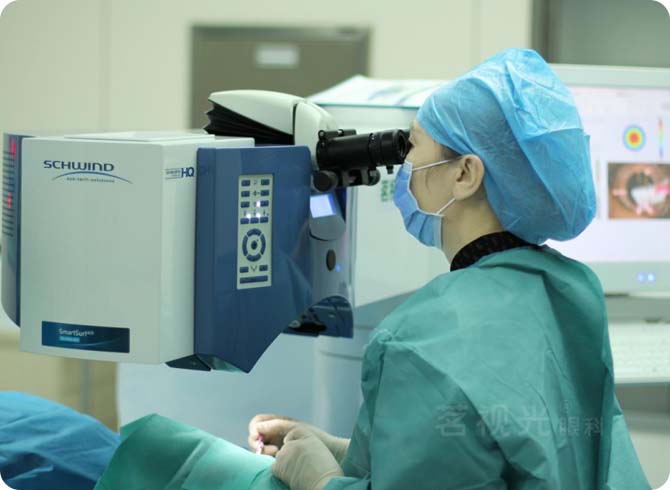
Laser secondary enhancement refers to a surgical method that uses laser technology again to accurately cut or adjust the cornea after myopia laser surgery, in order to further correct vision and improve visual quality, in response to postoperative issues such as regression of myopia vision, residual refractive errors, or poor visual quality. The surgical technique for secondary efficiency enhancement is relatively more difficult, and the Mingshi Optometry Ophthalmology team led by Zhou Yuehua and Li Ying, the first representative experts in China to carry out myopia laser surgery, has accumulated rich clinical experience in this area.
06
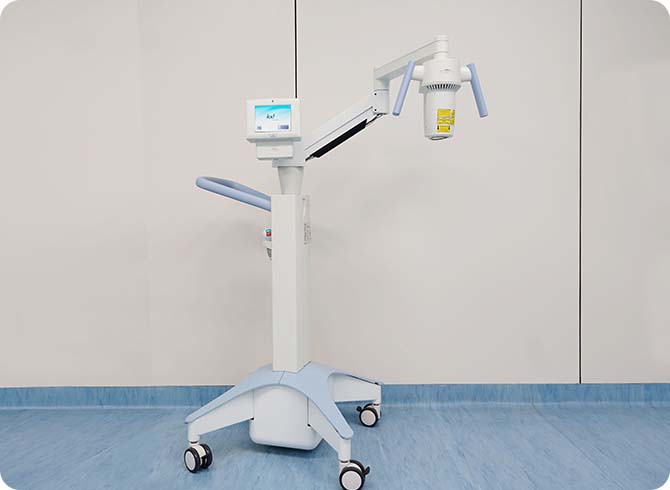
Corneal collagen cross-linking technology is widely used in the treatment of keratoconus. The main principle is to use 370nm wavelength ultraviolet light to activate riboflavin, induce chemical cross-linking reactions between collagen fibers in the corneal stroma layer, thicken the diameter of corneal collagen fibers, and improve the resistance of the corneal stroma to various degradation enzymes, thereby increasing the mechanical strength of the corneal stroma.
For customers with uneven corneal morphology and high specificity, corneal cross-linking and reinforcement surgery should be performed simultaneously with corneal myopia surgery to ensure more stable corneal biomechanics and vision after surgery.
For customers with uneven corneal morphology and high specificity, corneal cross-linking and reinforcement surgery should be performed simultaneously with corneal myopia surgery to ensure more stable corneal biomechanics and vision after surgery.
 Online Booking

 Tel
 WeChat

 Address

 Consult