 Myopia surgery
 Myopia prevention and control
 Presbyopia
 Cataract
 Dry eye
 400-8600-525
 CN
 One City, Three Campuses

1、 What is corneal collagen cross-linking surgery?
Corneal collagen cross-linking technology is widely used in the treatment of keratoconus. The main principle is to use 370nm wavelength ultraviolet light to activate riboflavin, induce chemical cross-linking reactions between collagen fibers in the corneal stroma layer, thicken the diameter of corneal collagen fibers, and improve the resistance of the corneal stroma to various degradation enzymes, thereby increasing the mechanical strength of the corneal stroma.
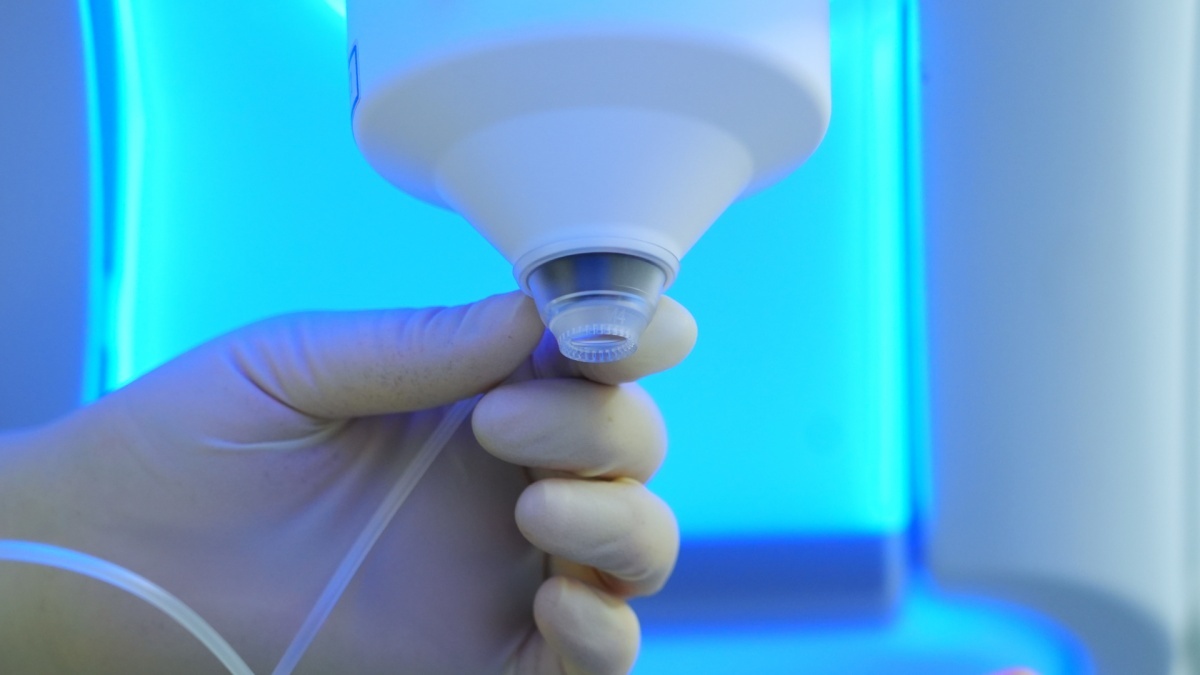
For customers with uneven corneal morphology and high specificity, corneal cross-linking and reinforcement surgery should be performed simultaneously with corneal myopia surgery to ensure more stable corneal biomechanics and vision after surgery.
2、 The process of corneal collagen cross-linking surgery
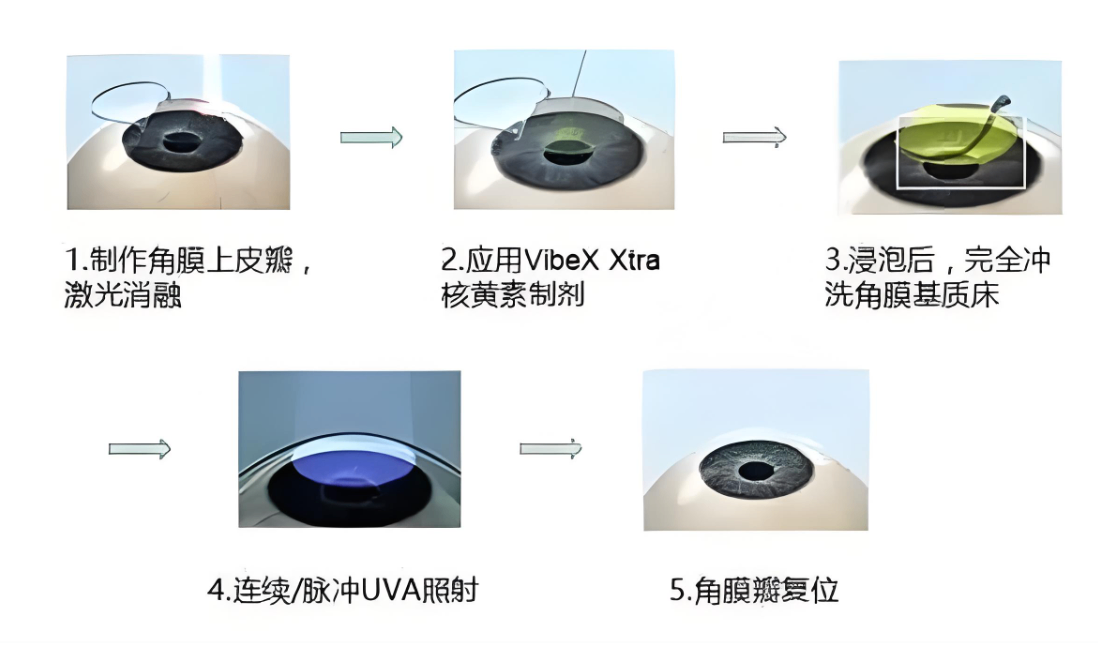
1. Core treatment indication: keratoconus
This is the most important and clinically supported indication for corneal collagen cross-linking surgery: keratoconus. Especially for advanced keratoconus, regardless of the severity of the condition, as long as the corneal thickness meets the requirements (generally, cross-linking surgery requires a remaining corneal thickness of at least 300 μ m or more), it is recommended to undergo corneal collagen cross-linking surgery as soon as possible to prevent further progression of keratoconus and avoid the condition from developing to the point where corneal transplantation is needed. A large number of long-term follow-up studies have confirmed that standardized cross-linking surgery can keep over 80% of advanced keratoconus stable for 10 years, significantly reducing the probability of corneal transplantation.
2. Adjuvant treatment for corneal refractive surgery (myopia surgery)
In recent years, cross-linking surgery has been increasingly used for preventive reinforcement in myopia surgery, which belongs to preventive applications. This is also a scene where patients often come into contact with cross-linking surgery in clinical practice.
3、 Why is cross-linking necessary for myopia surgery
Nowadays, many patients who undergo myopia surgery, especially full femtosecond and half femtosecond laser myopia surgery, are advised by doctors to undergo combined corneal collagen cross-linking surgery according to the situation. The core reason is to improve the safety of the surgery and prevent the risk of postoperative corneal dilation. The specific reasons can be divided into the following:
1. Compensate for the impact of laser surgery on corneal biomechanics
Both semi femtosecond and full femtosecond laser myopia surgery require cutting a certain thickness of corneal stromal tissue to correct myopia: the higher the degree of myopia, the more corneal thickness needs to be cut, and the thinner the remaining corneal stromal thickness after cutting, resulting in a decrease in the biomechanical strength of the cornea. If the preoperative corneal conditions are not particularly ideal, there is a risk of corneal dilation and keratoconus under the long-term action of intraocular pressure after surgery. Although the overall incidence of this risk is low (about 0.04% -0.2%), once it occurs, it will seriously affect vision and even require corneal transplantation.
Combined corneal collagen cross-linking reinforcement surgery can increase the strength of residual corneal collagen fibers after cutting, enhance corneal stability, offset the biomechanical decline caused by laser cutting, fundamentally reduce the risk of postoperative corneal dilation, and greatly improve the long-term safety of surgery.
2. Help relatively high-risk patients obtain surgical opportunities
Many myopic patients themselves have some relatively high-risk factors, and traditional surgical standards may not be suitable for laser myopia surgery, or they can only choose lens implantation surgery: for example, preoperative corneal thickness is thin (about 480 μ m-500 μ m), myopia degree is high (800-1000 degrees), or there is subclinical keratoconus (that is, mild abnormalities in corneal morphology that have not yet reached the diagnostic criteria for keratoconus). If laser surgery is directly performed, the risk of corneal dilation after surgery will be much higher than that of ordinary patients.
After cross-linking with corneal collagen, the cornea can be effectively strengthened, allowing patients who were originally not suitable for laser surgery to safely undergo laser myopia surgery, achieve better postoperative visual quality, and avoid the risks associated with intraocular surgery caused by choosing lens implantation surgery.
Of course, not all patients undergoing myopia surgery require combined corneal collagen cross-linking. For low-risk patients with sufficient corneal thickness, low myopia degree, and completely normal corneal morphology, conventional laser myopia surgery is already safe enough and does not require additional cross-linking. Only patients with certain risks or irregular corneal morphology evaluated by doctors will be recommended for combined cross-linking surgery.
 Back To List
 Online Booking

 Tel
 WeChat

 Address

 Consult