 Myopia surgery
 Myopia prevention and control
 Presbyopia
 Cataract
 Dry eye
 400-8600-525
 CN
 One City, Three Campuses

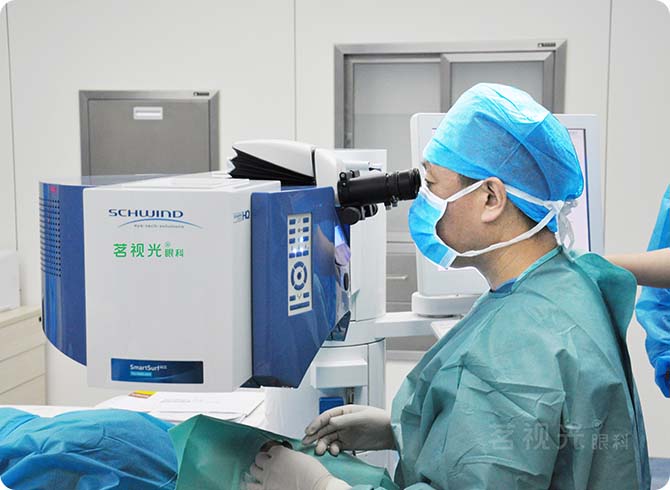
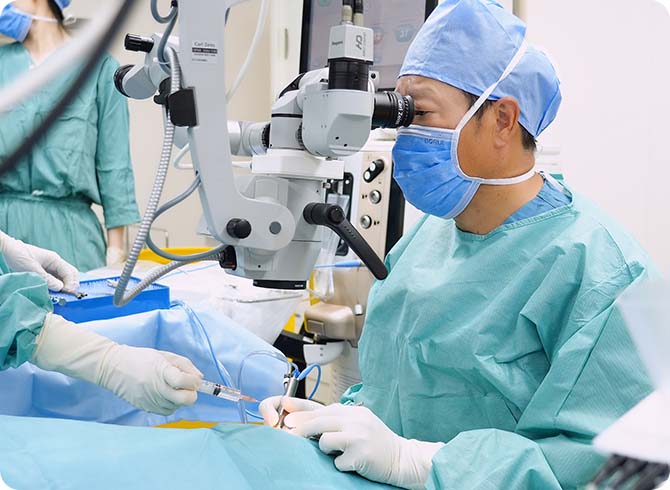
Laser secondary enhancement refers to a surgical method that uses laser technology again to accurately cut or adjust the cornea after myopia laser surgery, in order to further correct vision and improve visual quality, in response to postoperative issues such as regression of myopia vision, residual refractive errors, or poor visual quality. The surgical technique for secondary efficiency enhancement is relatively more difficult, and the Mingshi Optometry Ophthalmology team led by Zhou Yuehua and Li Ying, the first representative experts in China to carry out myopia laser surgery, has accumulated rich clinical experience in this area.
From a physiological perspective, the occurrence of refractive regression after laser surgery for myopia is often due to some patients having high myopia, strong corneal wound healing response, or poor eye habits after surgery, resulting in mild proliferation and remodeling of the corneal stroma layer, causing slight changes in corneal refractive power and rebounding of the originally corrected degree. The secondary efficiency enhancing surgery is to further correct the refractive state after rebound within a safe range of corneal thickness, without changing the original anatomical structure of the eye, only making precise adjustments on the basis of the first surgery.
1、 Selection of Laser Secondary Enhancement Surgery Methods for Myopia
The overall process of myopia laser secondary enhancement surgery is similar to the first laser surgery, but the surgical method is selected based on the patient's corneal condition:
1.If the patient has residual degree after the first full femtosecond SMILE surgery and the remaining corneal thickness is sufficient, they can choose to undergo full femtosecond enhancement again, make a new small incision, and remove the corresponding degree of stromal lens; Surface surgery, such as TPRK, can also be chosen to directly perform cutting on the corneal surface.
2.If it is the first half femtosecond LASIK surgery, the original corneal flap can be opened and the remaining degree of laser cutting can be performed under the flap to reset the corneal flap. Surface surgery, such as TPRK, can also be chosen to directly perform cutting on the corneal surface.
3.If the patient undergoes surface surgery for the first time and the remaining corneal conditions permit, secondary surface or lamellar surgery can also be chosen. The entire surgical procedure usually takes only 5-10 minutes, and the patient should remain awake throughout the entire process, cooperating with the doctor to monitor the indicator lights. You can also choose full femtosecond surgery.
2、 Experience and advantages of Professor Zhou Yuehua and Professor Li Ying in Mingshi Ophthalmology
Beijing Ming Vision & Ophthalmology is a specialized medical institution dedicated to myopia correction. It has accumulated a wealth of clinical experience in the field of myopia laser secondary enhancement surgery. Professors Zhou Yuehua and Li Ying are both top experts in the field of myopia laser surgery in China, each with outstanding experience and advantages
1.Professor Zhou Yuehua
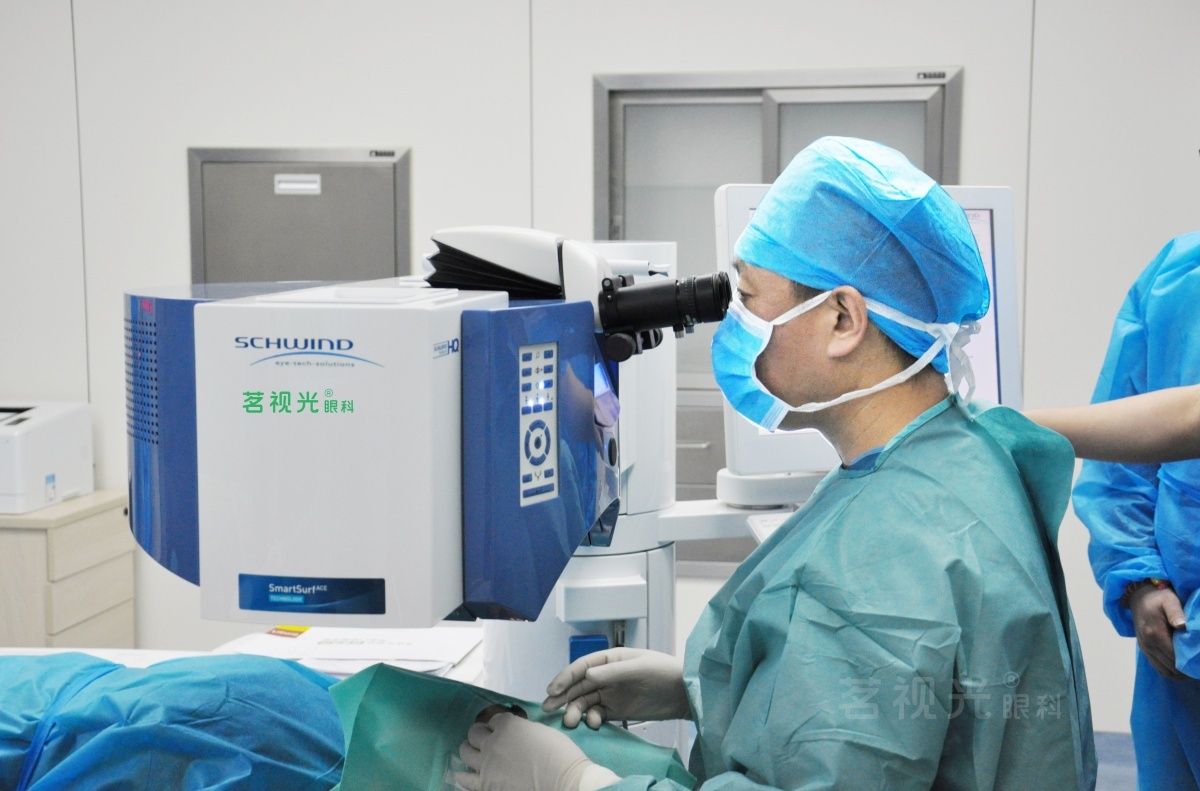
Professor Zhou Yuehua is one of the early experts in myopia laser surgery in China, with over 30 years of clinical experience in refractive surgery. He has completed more than 100000 cases of various myopia laser surgeries and has high industry recognition in the fields of difficult refractive correction and secondary enhancement surgery.
①Experienced in handling complex cases
Professor Zhou Yuehua has long focused on the research and clinical practice of complex cases such as refractive regression, corneal irregularity, and secondary enhancement surgery after the first surgery. He has handled a large number of complex secondary surgery cases referred by other institutions and has accumulated mature surgical plans for secondary enhancement surgery after different first surgery methods (full femtosecond, half femtosecond, surface surgery). He can develop safer and more accurate surgical plans according to the different corneal conditions of patients. For special cases with thin corneal thickness and irregular corneal morphology, he can also make accurate risk assessments and plan designs.
②Rigorous and meticulous diagnosis and treatment style
Professor Zhou Yuehua insists on a comprehensive and meticulous preoperative evaluation for the highly precise secondary efficiency enhancing surgery, without missing any details that may affect surgical safety. The surgical operation is precise and gentle, and the control of surgical details is very strict, which can bring stable and reliable surgical results to patients.
③Proactive secondary surgical design
In certain specific cases, Professor Zhou Yuehua will actively design a secondary surgical plan based on the patient's corneal thickness, corneal morphology, refractive error, and other factors.
If the patient is highly myopic and has a thin cornea during the initial surgery, the doctor can actively design multiple light zones or normal light zones, which can save the cornea and avoid the design of large light zones consuming more corneal tissue (the larger the optical zone, the more corneal tissue is consumed). However, there is an increased possibility of postoperative visual impairment and glare.
There was once a patient with a left eye myopia of 825 degrees and a corneal thickness of 510 microns, and a right eye myopia of 800 degrees and a corneal thickness of 500 microns, which were typical high myopia and corneal thinning. When designing the surgery, after communicating with the patient, I made a plan that required two surgeries for the patient. During the first surgery, thin flap femtosecond LASIK surgery was performed with a multi zone design, greatly saving corneal tissue. One year after the surgery, the patient voluntarily underwent a second LASIK surgery to increase efficiency. Due to the minimal corneal ablation during the first surgery, the second surgery can easily expand the light area, effectively resolving postoperative glare and regression. The patient's visual acuity is now 1.0, and the glare has also been relieved. In this case, if precise personalized design to save corneal tissue is not adopted during a single surgery, even if myopia and glare occur, it is difficult to perform a second surgical repair due to insufficient corneal thickness. The design of the proactive secondary surgery scheme cleverly avoids this risk by carefully calculating the corneal thickness and leaving enough cornea for secondary repair to increase efficiency, effectively solving the patient's problem.
2.Professor Li Ying
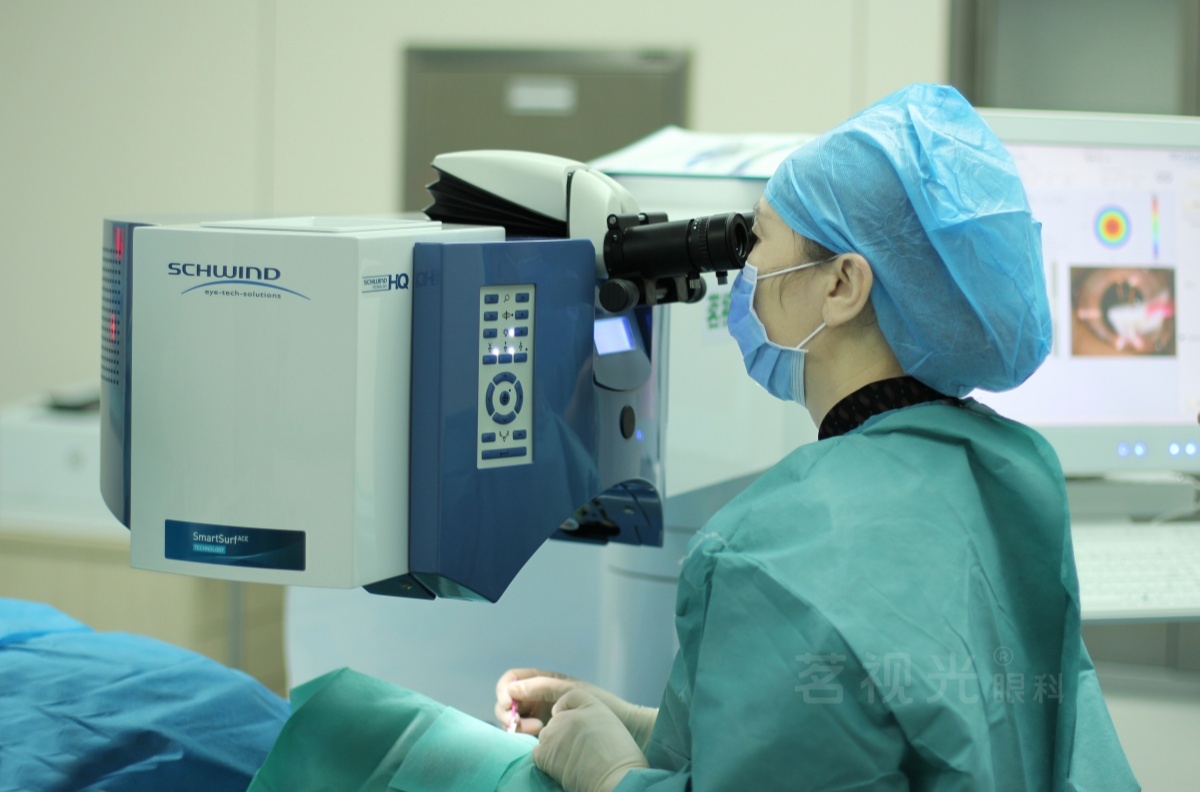
Professor Li Ying is also a well-known expert in the field of refractive surgery in China, with over 30 years of clinical experience in refractive surgery. She is one of the earliest experts in China to carry out full femtosecond laser myopia surgery and femtosecond laser surgery, and has outstanding advantages in personalized myopia correction and secondary enhancement surgery.
①Full surgical coverage, suitable for different patient situations
Professor Li Ying is proficient in all mainstream myopia laser surgery methods, and can flexibly choose the most suitable enhancement surgery method for patients after different first-time surgeries. For example, after half femtosecond surgery, one can choose subvalvular cutting, and after full femtosecond surgery, one can choose secondary full femtosecond or surface enhancement. For patients with special corneal conditions, the safest surgery method can also be selected, balancing surgical safety and postoperative visual quality.
②Emphasize personalized program design
Professor Li Ying attaches great importance to the individual differences of patients. For patients undergoing secondary enhanced surgery, personalized cutting plans will be designed based on their eye needs, corneal conditions, and the situation of the first surgery. This not only corrects the degree but also optimizes the shape of the cornea, reducing postoperative discomfort such as glare and dry eye, improving the overall visual quality after surgery, and meeting the patient's demand for high-definition vision.
③Rich experience in femtosecond secondary surgery
Professor Li Ying, as one of the earliest experts in China to carry out full femtosecond surgery, has accumulated a wealth of experience in secondary enhanced surgery after full femtosecond surgery. She can accurately locate new cutting areas, avoid existing surgical incisions, and accurately extract the matrix lens for secondary cutting. The surgical trauma is minimal, the postoperative recovery is fast, and the effect is stable.
Both experts have been dedicated to refractive clinical work for many years, always keeping up with the latest technological developments in the industry. At Mingshi Vision Ophthalmology, a specialized platform for myopia correction, they can provide professional, safe, and accurate diagnosis and treatment services for patients who need secondary efficiency enhancing surgery.
 Back To List
 Online Booking

 Tel
 WeChat

 Address

 Consult