 Myopia surgery
 Myopia prevention and control
 Presbyopia
 Cataract
 Dry eye
 400-8600-525
 CN
 One City, Three Campuses

Lens surgery includes lens implantation and lens replacement surgery. Lens implantation surgery (such as icl/pil) is an "additive" myopia correction surgery (referred to as "subtractive" relative to corneal laser), also known as ocular endoscopic surgery. By implanting intraocular lens into the eye, the refractive power is changed, which is equivalent to placing a myopia lens in the eye. It does not change the normal structure of the cornea, and the correction range can reach 2000 degrees. It is suitable for people who do not have the conditions for corneal laser surgery, such as high degree and relatively thin cornea. Under the leadership of Professor zhusiquan, mingshiguang ophthalmic crystal center carried out physiological crystal implantation, with higher surgical safety.
1、 Lens implantation surgery (such as icl/prl)
Visian ICL is short for ICL, and its full English name is implantable contact lens. ICL is currently a safe and high-end myopia correction program. Different from excimer laser surgery, ICL does not cut the cornea, and ICL crystals are implanted into the eye through minimally invasive surgery. The operation time is short, there is no need to change the structure of the eye itself, there is no damage to the cornea, and the vision is clear after correction. It is a new trend of myopia correction technology.
ICL not only does not cut the cornea, but also has reversibility, which cannot be achieved by other correction methods. With the growth of age, if vision changes, ICL crystals can be removed and replaced, which will not affect other eye surgery in the future.

1.People suitable for ICL(18-55 years old)
①Myopia 200-2000 degrees
②Myopia, with or without astigmatism, hyperopia
③ The depth of the anterior chamber is appropriate, and the corneal endothelial cell density is within the acceptable range (it needs to be determined by the ophthalmologist through examination)
④The diopter is stable, and the change in the diopter of glasses within 1 year does not exceed 0.5d
⑤No other contraindications
⑥Dry eye or thin cornea (patients not suitable for LASIK)
2.Six characteristics of ICL
① Safety: ICL does not remove or damage corneal tissue, and has superior effects that cannot be matched by excimer laser.
② Rigorous: thorough inspection and preparation; Customized crystals;
③Reversible: unlike contact lenses, ICL crystals can be permanently removed without causing changes in eye structure.
④Protection: ICL materials contain UV blocking genes, which can prevent harmful UV rays from entering the eye, thus effectively curbing the related eye diseases caused by UV rays.
⑤HD: restore the eye to excellent HD visual quality. Most of the corrected vision can reach or even exceed the expected corrected vision before correction.
⑥ Comfort: the stable position of ICL in the eye ensures its normal operation in coordination with your eyes. Once the crystals are in the eye, they cannot be seen or felt.
3.characteristics and advantages of personalized ICL lens implantation in mingshiguang ophthalmology
①Surgical characteristics and advantages:
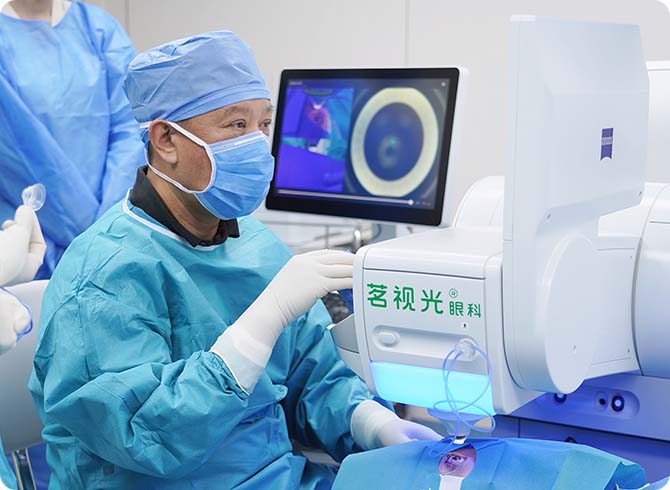
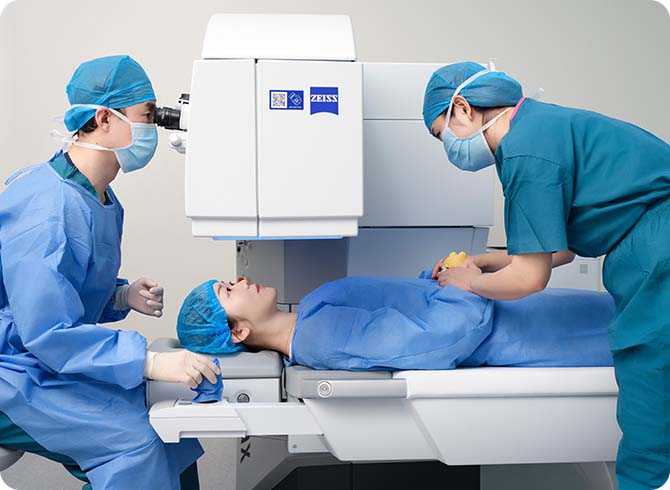
Ming Vision & Ophthalmology Continued conventional ICL crystal implantationNoninvasive correctionAnd carried out upgrading and innovation. The intraocular lens was customized according to the comprehensive and precise measurement results of myopia, astigmatism and ocular data of each person before surgery. Intraoperative useFemtosecond laser assisted technologyInstead of traditional manual incision, the incision position can be accurately controlled;Equipped with 3D navigation microscope,To achieve three-dimensional visualization operation, the operation is more accurate and safe, with lower higher-order aberrations and better visual quality after operation.
②Expert advantages:
Ming Vision & Ophthalmology has gathered an expert team led by Professor zhusiquan, the former director of the cataract center of Beijing Tongren Hospital. They have been deeply involved in the field of lens implantation surgery for many years. They have rich clinical practice experience and high theoretical level, which ensure the successful development of personalized ICL lens implantation surgery.
③Advantages of medical team:
Ming Vision & Ophthalmology has a medical team of more than 100 people, all of whom are from professional backgrounds. Some of them have worked in Tongren Hospital for many years, and have rich theoretical knowledge and practical experience. They are proficient in operating various equipment and accurately studying the inspection data.
④Advantages of inspection equipment:
Ming Vision & Ophthalmology has many sets of professional inspection equipment, such as Pentacam anterior segment diagnosis system, IOL master optical biometry instrument, corneal endothelial microscope, iTrace visual function analyzer, and more than 20 inspection items, which can more accurately reflect the ocular conditions and formulate a personalized operation plan.
⑤Lifelong service advantages:
Ming Vision & Ophthalmology focuses on the field of myopia surgery and implements the lifelong management system of medical records. Each examination data before and after surgery will be kept intact for ready access; Ensure that the eye health service can be obtained at any time during the review seven times a year after the operation and the annual review thereafter, with regular reminders, complete archiving, and lifelong tracking.
2、 Lens replacement surgery (IOL)
Lens replacement surgery (IOL) is to remove the natural lens through a small incision and implant a multifocal intraocular lens. Because it has multiple foci, it can simultaneously solve the problems of myopia, astigmatism, presbyopia and possible cataract in the future. It is suitable for people who want to remove the lens because of high myopia, older age, or the presence of signs of lens opacity, or the eye conditions are not suitable for corneal laser and ICL.
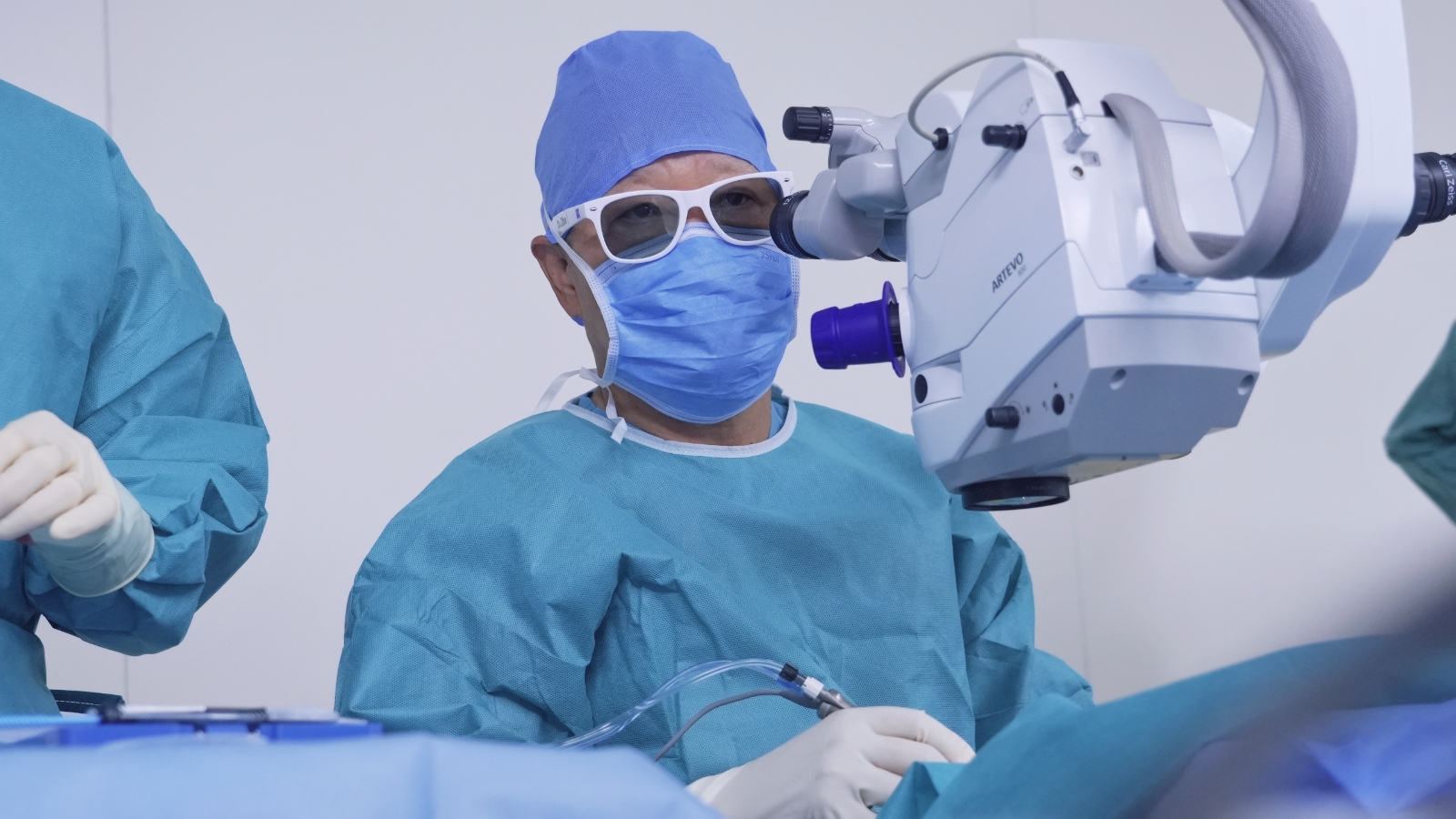 The special feature of this kind of intraocular lens is that it has multiple focal points of different degrees, which can simultaneously meet the visual requirements of different scenes at long distance, medium distance and short distance, simulate the natural adjustment ability of human eyes when they are young, and solve the problem of aging caused by insufficient lens adjustment ability from the root. If the patient is complicated with cataract at the same time, the operation can also solve the cataract problem at the same time, and realize a single operation to solve a variety of eye problems.
1.advantages of lens replacement surgery (IOL)
①Clear vision in the whole process, suitable for the needs of the whole scene
Different from the traditional single focus intraocular lens, which can only meet the clear vision of a single distance, the postoperative patients can only see far and wear reading glasses to see near, or can only see near and wear myopia glasses to see far; The multifocal crystal can simultaneously cover the full distance vision of far (more than 5 meters, such as sightseeing and blackboard), medium (50cm-3 meters, such as looking at the computer, cooking and dashboard while driving), and near (30-40cm, such as reading, looking at the mobile phone and threading needles). Most patients do not need to wear reading glasses after surgery, which can meet the vast majority of eye use scenes in daily life.
② Solve problems at the root and achieve long-term stable results
This operation replaces the aging natural lens, and the intraocular lens will not age and harden again after operation. The effect of correcting old flowers can be maintained for a long time, and the problem of deepening old flowers will not occur again. If early cataract is complicated before surgery, surgery can also remove cataract in advance to avoid reoperation after cataract development in the future.
③Minimally invasive surgery and rapid postoperative recovery
At present, the femtosecond laser assisted phacoemulsification technology is mostly used in the multifocal crystal replacement surgery. The surgical incision is only 2-3mm without suturing. The operation process only takes 10-15 minutes. Most patients can resume normal eye use 1-2 days after surgery, with small trauma and low incidence of adverse reactions.
④Personalized selection scheme
At present, there are different design types of multifocal crystals, including regional refraction type, diffraction type, continuous focus type, etc. the matching crystals can be selected according to the patients' daily eye habits (such as preferring to watch mobile phones to read, frequently using computers, often driving out, etc.) and eye conditions (corneal curvature, anterior chamber depth, pupil size, etc.), which can better meet the personalized needs of different patients.
2. suitable for people
①Older people older than 40
People who meet the diagnosis of presbyopia, have blurred vision, need to wear reading glasses to read and write, have a clear need to remove reading glasses, have different degrees of aging changes in their own lenses, and can accept surgical correction.
②Older adults with cataract
There are senile flowers and cataract in the middle-aged and elderly people at the same time. With the development of cataract, visual acuity gradually declines. Two problems can be solved at the same time through one operation, which can not only correct senile flowers, get rid of glasses, but also treat cataract and restore clear vision.
③ High myopia combined with presbyopia
People who have high myopia and have presbyopia when they grow older, need to replace myopia and reading glasses at the same time, and it is very inconvenient to take off and wear glasses frequently. Multifocal lens replacement can correct myopia and presbyopia at the same time, and there is no need to wear glasses after surgery.
④People who require high quality of life and are not suitable for corneal laser and ICL
It is necessary to frequently switch between near and far eye use scenes in daily life. For example, the elderly people who often drive and need to see navigation, need to see computers and also need to read and write files, and don't like wearing glasses in daily travel can meet high-quality eye use needs.
 Back To List
 Online Booking

 Tel
 WeChat

 Address

 Consult